
For insurance intermediaries like brokers, insurance repositories, third-party administrators, etc, 100 per cent FDI may be permitted.

A well-established tax system would have a predictable buoyancy - how fast the collections grow as a proportion to the growth of the economy. But that is not the case with GST. It is still undergoing substantial changes as the government responds to structural as well as administrative glitches.

The studies found that sectors with the highest unaccounted income included real estate, mining, pharmaceuticals, pan masala, gutkka and tobacco, bullion and commodity markets, film industry, educational institutes and professionals.

When agricultural holdings get fragmented over years, the state government has the power to step in and help farmers pool their land parcels for improving land productivity, after which the pooled land is divided up into larger plots. Instead of the fragments they hold, a farmer gets a single contiguous patch of an equal size. But, it is done only for agricultural holdings. In Kot village, however, the consolidation has been ordered for the entire village land, including the hilly forested commons, which are already pooled. This is not the first time that the Haryana government has attempted such a consolidation of Kot common lands.

Sitharaman exhorted the states to work together with the Centre, stating that while the Union government sets the direction of economic growth, it is for the states to ensure effective implementation on the ground.

Restricted by state government orders, the ownership of such land could not be formally registered, so the advances made continued to be reflected in the accounts as 'advances against land'.

The land acquisition, the consolidation process in Kot and a slew of other decisions by the Haryana government to open the hills to privatisation and commercial activity run contrary to court orders, environmentalists' demand, and at times the Union government's measures to protect the Aravalli hills, say Nitin Sethi & Kumar Sambhav Shrivastava.

This meeting has led to the deferment of the Goods and Services Tax (GST) Council meeting by a day.

Despite a steady collection rate, the government faces a steep Budget target of Rs 6.1 trillion for CGST for 2019-20.

The US is pressing for taxing digital economy through the 'marketing intangibles' principle and the UK through a 'user-base' principle.

Successive governments focused on altering the clearance processes but largely gave a pass to the second, and essential, element of environmental regulations for monitoring pollution levels and how industries followed conditions laid down for clearances.

The report, floated recently, comes a few days after the government cancelled the registration of Bengaluru-based NGO Infosys Foundation for alleged violation of norms in receiving foreign grants.

The focus will be on tackling the unfinished agenda requiring immediate attention like tax structure for solar projects, uniform tax rate on state-organised and state-authorised lotteries, taxing non-potable alcohol besides certain changes in the law, extension for NAA and rate rationalisation.

There is talk of a fresh approach to a new labour code as well as reforming land acquisition laws in such a way as to be politically.
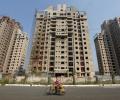
The ease with which city-level master plans are altered and land-use patterns changed without considering carrying capacities or the overall environmental footprint of urbanisation in different states has already created water and air pollution crises in several emerging and existing cities.

The rates of price rise in many services used by the common man, including hospital and nursing, cook, domestic help and bus (fare), among others, have also touched double digits during the last four years, putting a burden on disposable income.

Infrastructure projects were the top picks for MPs, with 40% of the total funds spent on the development of railways, roadways, pathways and bridges.

CBDT feels 30% growth in income-tax not feasible.

The direct tax collections are likely to fall short of the revised Budget target by Rs 650 billion and, in fact, were Rs 150 billion lower than the original estimate for the fiscal

The government claims the existing safeguards under the law are adequate, lawful, towards a legitimate purpose and provide for a "proportionate interference" in citizens' right to privacy, reports Nitin Sethi.
